
Employee Recognition
Automotive Frontline Engagement: A Practical Playbook for Dealership Groups
Automotive frontline engagement breaks down when deskless teams feel disconnected across rooftops. Learn a practical recognition-led playbook for dealership groups.
Automotive frontline engagement is harder than it looks from head office.
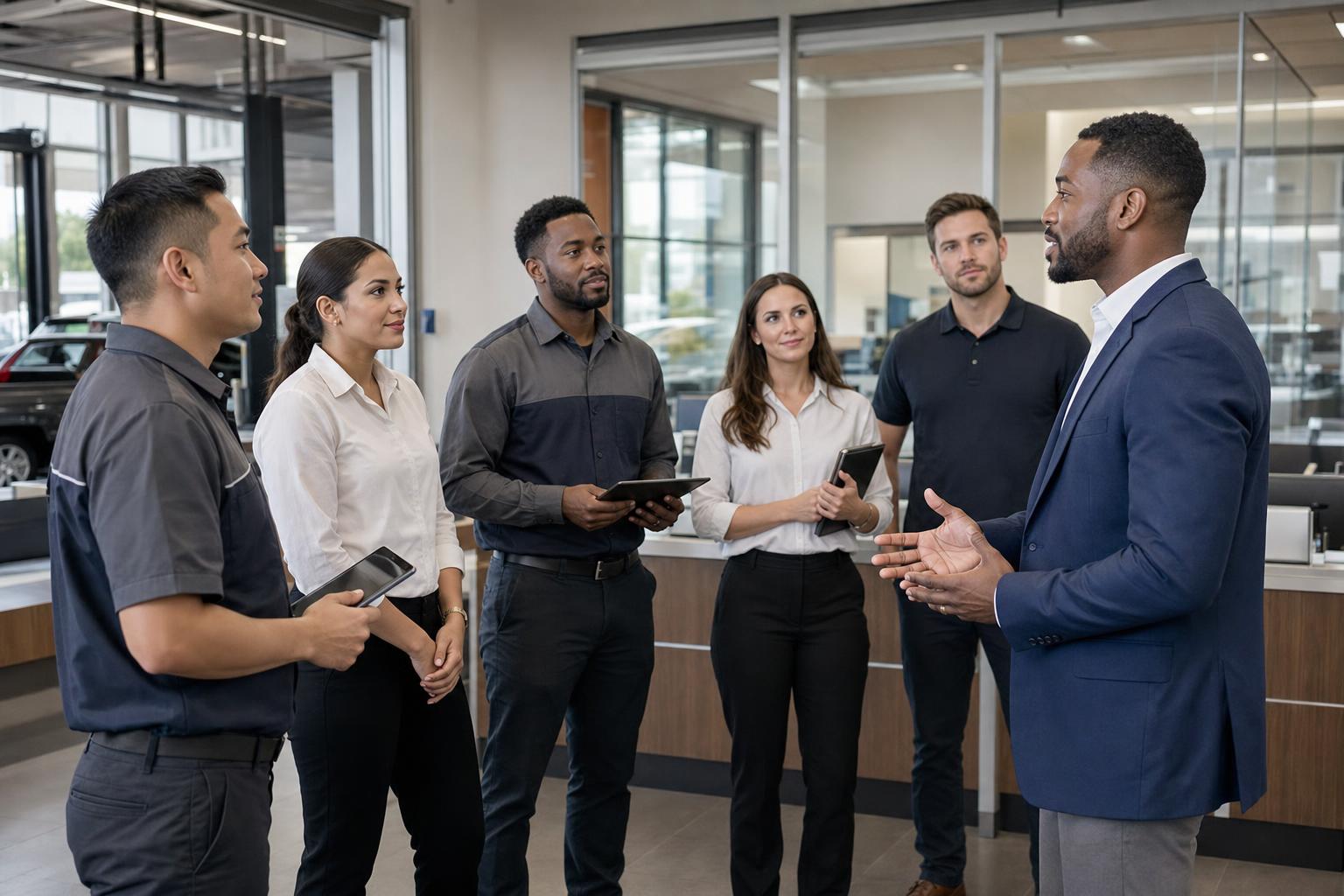
Dealership teams are busy, distributed, and mostly deskless. Sales consultants are chasing opportunities. Service advisors are managing customer pressure. Technicians are moving between bays. Parts, admin, delivery, finance, and reception teams are keeping the operation moving in the background.
That is why a generic engagement program rarely lands. The people experience inside a dealership group is shaped by daily moments: who gets noticed, which behaviours are reinforced, how managers communicate under pressure, and whether employees across rooftops feel connected to the same standard.
For large dealership groups and OEM networks, automotive frontline engagement needs to become an operating rhythm, not a once-a-year survey response.
Why Frontline Engagement Breaks Down in Dealership Groups
Most automotive leaders are not short on values, standards, or brand expectations. The challenge is making those expectations visible in the daily work of every location.
Engagement breaks down when frontline employees experience the business differently depending on their department, manager, or rooftop.
- Sales teams hear about targets, but not always teamwork.
- Service teams carry customer tension, but often receive recognition only when something goes wrong.
- Technicians and parts teams can feel invisible because their work happens away from the showroom floor.
- New starters learn culture by watching local habits, not reading head office material.
- Managers are expected to motivate teams, but rarely get a simple system for doing it consistently.
The result is culture drift. One location feels energised and connected. Another feels transactional. Another depends entirely on one strong manager. Across a group, that inconsistency becomes expensive.
The Engagement Problem Is Also a Retention Problem
Automotive turnover is not only caused by pay, hours, or competitor offers. Those matter, but people also leave when they feel unseen, unsupported, or disconnected from the work they are doing.
Frontline employees are asking practical questions every week:
- Does anyone notice when I handle a difficult customer well?
- Are good behaviours recognised, or only mistakes?
- Do standards apply equally across locations?
- Can I grow here, or am I just filling a roster?
- Is this team proud of the work we do?
If the answer is unclear, engagement becomes fragile. That is why dealership employee retention and frontline engagement should be managed together. Recognition is one of the fastest ways to connect the two because it makes contribution visible before people mentally check out.
For a deeper retention lens, see our article on dealership employee retention through recognition.
Recognition Is the Frontline Engagement Layer
Recognition is often treated as a nice cultural extra. In a dealership environment, it can do much more.
Done well, recognition becomes a communication layer between strategy and daily behaviour. It tells people what the business values in real examples:
- A service advisor keeping a customer updated through a parts delay.
- A technician helping a new apprentice understand a quality process.
- A sales consultant protecting trust instead of forcing a short-term outcome.
- A delivery coordinator catching a handover detail before it becomes a customer issue.
- A manager recognising a quiet contributor who keeps the team moving.
Those moments matter because they show employees what great looks like in context. They also help leaders see which behaviours are spreading across the group and which locations need support.
What Good Automotive Frontline Engagement Looks Like
Strong engagement in dealership groups is not loud or complicated. It is consistent, visible, and connected to the work.
1. Employees know what behaviours matter
Frontline teams should be able to name the behaviours that get recognised: ownership, customer care, speed with quality, teamwork, safety, follow-through, learning, and leadership under pressure.
2. Recognition reaches every department
If recognition only follows sales wins, the culture narrows. Great dealership performance depends on service, parts, admin, finance, delivery, reception, and support teams as well.
3. Managers use a shared rhythm
Engagement should not rely on manager personality. Every manager needs a simple weekly habit for noticing and reinforcing the right work. We covered this more deeply in our article on dealership manager consistency.
4. Employees can recognise each other
Peer recognition is especially useful for deskless work because employees often see the effort that managers miss. A technician notices who stayed late to help. A service advisor sees who calmed down a customer. A receptionist knows who protected the first impression.
5. Leaders can see engagement by location
Group leaders need visibility across rooftops. Which locations are recognising consistently? Which departments are being missed? Which managers are building strong habits? Without that visibility, engagement becomes guesswork.
A 30-Day Playbook for Dealership Groups
You do not need to rebuild your entire people strategy to improve frontline engagement. Start with a focused 30-day sprint.
Week 1: Define the frontline behaviours
- Choose 5-7 behaviours that connect directly to customer experience, retention, safety, and operational quality.
- Write examples for sales, service, parts, admin, finance, delivery, and management.
- Use plain language that frontline teams would actually use.
Week 2: Launch visible recognition
- Ask every manager to recognise at least two specific moments each week.
- Require each recognition to name the behaviour, the action, and the impact.
- Make recognition visible across locations so teams can learn from each other.
Week 3: Add peer-to-peer recognition
- Invite employees to recognise colleagues who helped customers, teammates, or operational flow.
- Prompt departments that are usually quieter, especially service, parts, admin, and delivery.
- Share the best examples in team meetings or internal channels.
Week 4: Review coverage and coach managers
- Look at recognition by location, department, and manager.
- Identify teams receiving little or no recognition.
- Coach generic recognition into stronger examples with specific behaviour and business impact.
- Compare recognition activity with pulse feedback, turnover risk, absenteeism, or customer metrics.
What to Measure
The goal is not to turn recognition into another admin task. The goal is to make engagement visible enough to manage.
- Participation: Are managers and employees actually using the rhythm?
- Coverage: Which locations, departments, and employees are being recognised?
- Quality: Are recognition moments specific, or are they generic praise?
- Consistency: Is recognition happening every week or only during campaigns?
- Business connection: Are recognised behaviours tied to customer experience, retention, safety, or operational standards?
These metrics give automotive leaders a practical view of engagement before it shows up as turnover or customer experience inconsistency.
Final Thought
Automotive frontline engagement does not improve because head office says culture matters. It improves when employees repeatedly experience proof that their work is seen, valued, and connected to something bigger than the next transaction.
For dealership groups, recognition is one of the most practical places to start. It works across rooftops. It reaches deskless teams. It gives managers a simple habit. It turns values into visible behaviour.
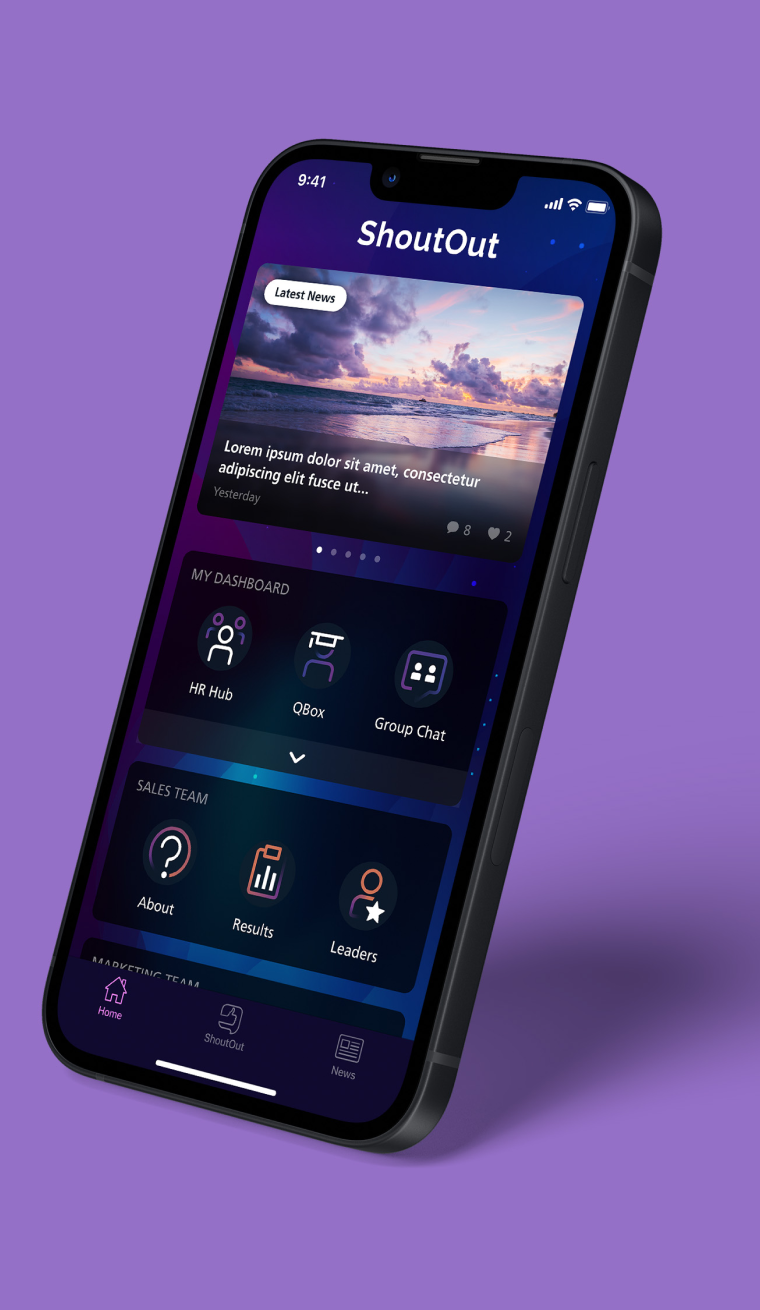
ShoutOut helps multi-location teams make recognition specific, visible, and measurable across managers, departments, and locations. If your dealership group is trying to strengthen engagement without adding heavy process, start by making great frontline work easier to see.