

Employee Recognition
Dealership Manager Consistency: The Missing Lever for Frontline Engagement
Multi-location dealership groups need more than values posters. Learn how consistent manager recognition keeps frontline teams aligned, engaged, and ready to deliver.
In a multi-location dealership group, culture is not what head office says it is. Culture is what employees experience from their direct manager this week.
That is the hard part for automotive leaders. One rooftop has a service manager who celebrates great customer saves, reinforces standards, and notices effort before people burn out. Another rooftop has a manager who only speaks up when something goes wrong. Same brand. Same values. Completely different employee experience.
For large dealership groups and OEM networks, manager consistency is now a frontline engagement problem. If recognition, feedback, and expectations vary by location, your best people do not just feel unseen. They start comparing workplaces, teams, and managers. Then they leave.
Why Manager Consistency Matters in Dealership Groups
Automotive work is local, fast, and people-heavy. Sales teams chase monthly targets. Service teams manage queues, parts delays, warranty pressure, and customer frustration. Admin and delivery teams keep the experience moving behind the scenes.
When every department is under pressure, employees look to managers for signals:
- What work actually matters here?
- Does anyone notice when I go above and beyond?
- Are standards applied fairly across locations?
- Is this a place where good people can grow?
If those signals are inconsistent, engagement becomes dependent on manager personality. That is a risky operating model for any dealership group trying to scale culture across rooftops.
The Hidden Cost of Inconsistent Recognition
Recognition often gets treated as a soft culture activity. In dealerships, it is more operational than that. Recognition tells frontline employees which behaviours are worth repeating.
When recognition is inconsistent, the business pays for it in practical ways:
- Turnover rises in the wrong pockets. Strong employees leave managers, not just companies.
- Customer experience varies by location. The behaviours that create loyalty are not reinforced evenly.
- Managers interpret values differently. One team rewards speed, another rewards care, another rewards only sales volume.
- Quiet contributors disappear. Technicians, coordinators, advisors, and support staff can be overlooked if recognition only follows the loudest wins.
- Head office loses visibility. Leaders cannot see which managers are building culture and which are relying on goodwill.
For automotive groups with high turnover and deskless teams, this is not theoretical. It shows up in hiring cost, onboarding drag, missed process standards, and inconsistent customer outcomes.
What Consistent Recognition Looks Like
Consistency does not mean scripted praise. It means every manager uses the same basic operating rhythm for noticing and reinforcing the work that matters.
1. Recognise specific behaviours, not vague effort
“Great job” is polite. It is not useful. A better recognition moment names the action, the standard, and the impact.
Example: “You stayed with that customer through the parts delay, kept them updated, and protected the CSI outcome. That is exactly the ownership we need in service.”
2. Link recognition to dealership outcomes
Frontline teams need to see how daily work connects to business results. Recognition should point to outcomes like customer satisfaction, repeat service, handover quality, safety, speed, teamwork, and retention.
3. Make recognition visible across rooftops
Private praise matters, but visible recognition spreads standards. When employees see what other locations are celebrating, they get a clearer picture of what “great” looks like across the group.
4. Give managers a weekly rhythm
Do not rely on managers remembering to recognise people when they are already stretched. Build a simple cadence:
- Monday: One team win from the previous week.
- Wednesday: One peer-to-peer shoutout from the floor.
- Friday: One customer-impact story tied to a group value.
A Simple Playbook for Multi-Location Dealerships
To improve consistency without creating another admin burden, start with a 30-day manager recognition sprint.
Week 1: Define the behaviours
- Pick 4-6 behaviours that support the dealership group’s priorities.
- Use plain language managers and frontline teams would actually say.
- Include examples across sales, service, parts, admin, and delivery.
Week 2: Launch the manager rhythm
- Ask every manager to post or submit two recognition moments per week.
- Require each recognition to include behaviour plus impact.
- Make examples visible so managers can learn from each other.
Week 3: Coach quality
- Review recognition examples for specificity.
- Spot generic praise and rewrite it into stronger examples.
- Share the best examples with managers as a benchmark.
Week 4: Measure coverage
- Track which locations are participating.
- Track which departments are being recognised.
- Identify employees who are never seen, especially quiet contributors.
- Compare manager consistency with turnover, engagement pulse results, or customer metrics.
What Automotive Leaders Should Measure
You do not need a complicated dashboard to start. The goal is to make manager consistency visible.
- Recognition frequency: Are managers recognising weekly, or only during campaigns?
- Recognition quality: Does the message include a specific action and business impact?
- Coverage: Which employees, departments, and locations are being missed?
- Peer participation: Is recognition only top-down, or are teams recognising each other?
- Manager adoption: Which managers need coaching or support?
The real value is not the metric itself. It is the management conversation the metric creates.
The Leadership Shift
Large dealership groups cannot afford culture by chance. Too much depends on the daily behaviour of local managers: how they set standards, how they respond under pressure, and whether they notice the work that keeps customers loyal.
Recognition gives leaders a practical way to scale those standards. It turns values into observable behaviour. It helps good managers become more consistent. It gives head office visibility without adding heavy process.
Most importantly, it tells frontline employees that great work is seen, valued, and worth repeating.
Final Thought
If you want stronger frontline engagement across dealerships, start with manager consistency. Not another campaign. Not another values poster. A repeatable recognition rhythm that helps every rooftop reinforce the same standard of work.
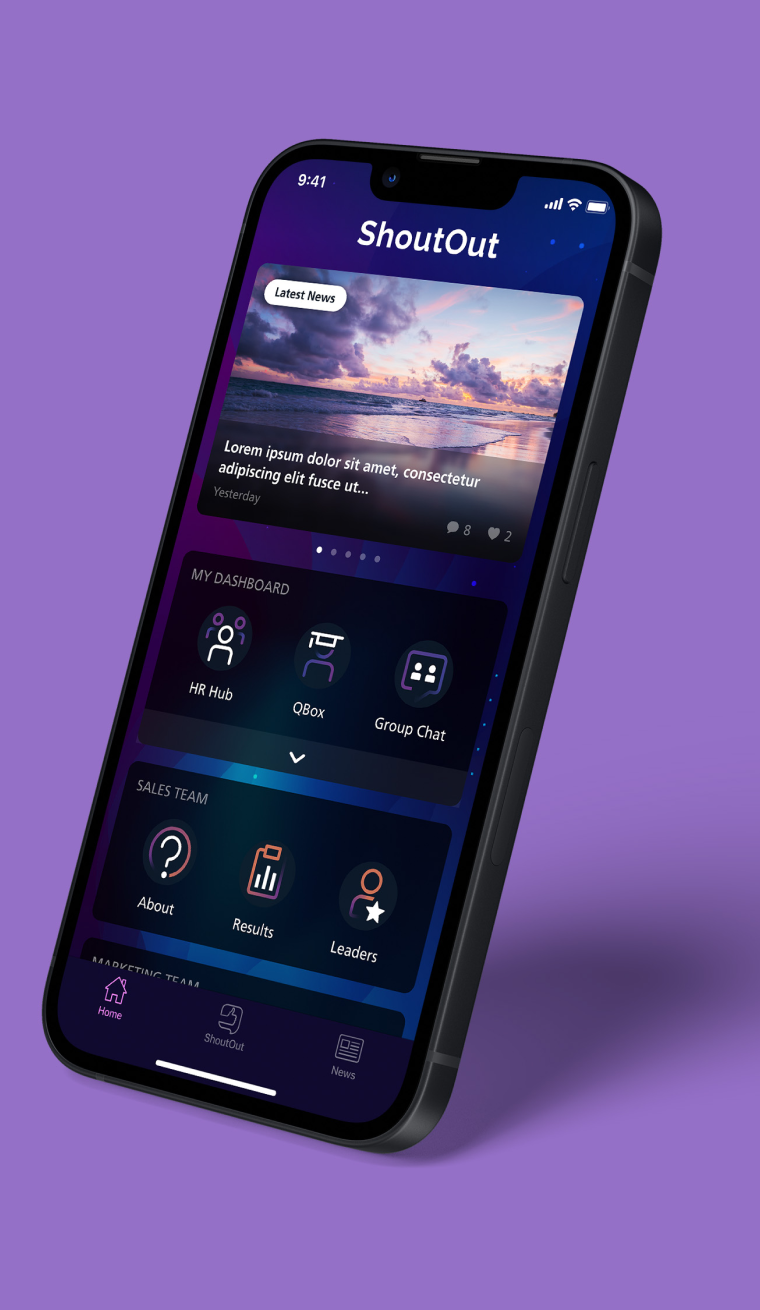
ShoutOut helps multi-location teams make recognition visible, specific, and measurable across managers, departments, and locations. If consistency is becoming harder as your group grows, that is the place to start.