

Employee Recognition
Employee Recognition Programs for Car Dealerships: A Practical Guide
Build a dealership employee recognition program that improves retention, manager consistency, and frontline engagement across every location.
A dealership employee recognition program should do more than celebrate the occasional sales result. It should help a busy, multi-location automotive business keep great people, reinforce the right behaviours, and give every employee a consistent experience of the culture.
That is harder than it sounds. Dealership teams span sales, service, parts, finance, administration, customer care, and leadership. Many employees are deskless. Managers are under constant operational pressure. One rooftop may recognise people every day while another only notices the monthly leaderboard.
The result is often a recognition gap: the people doing important work behind the customer experience are less visible, manager habits vary by location, and appreciation arrives too late to influence retention.
This guide explains how to build an employee recognition program for car dealerships that is practical, measurable, and consistent across locations.
Why Car Dealership Recognition Programs Often Miss the Mark
Most dealership groups already recognise employees in some form. The issue is not whether recognition exists. It is whether recognition reliably reaches the right people and reinforces the right outcomes.
- Recognition is too sales-heavy. Revenue matters, but the customer experience also depends on service advisors, technicians, detailers, parts teams, finance, administration, and cross-department support.
- It depends on individual managers. Employees receive very different experiences when one leader is naturally appreciative and another is focused only on problems.
- It happens too infrequently. Annual awards and monthly meetings cannot reinforce the everyday behaviours that shape performance.
- It is generic. A quick “great job” feels positive, but it does not tell the employee or the wider team what should be repeated.
- It excludes deskless employees. If recognition lives in email or an HR portal, frontline teams may never see it.
A strong program closes those gaps. It makes good work visible in the flow of work, gives managers a simple operating rhythm, and connects individual contributions to dealership values and business outcomes.
What an Effective Dealership Employee Recognition Program Should Achieve
1. Improve retention in high-turnover roles
Employees are more likely to disengage when effort goes unnoticed, especially during the first months in a demanding role. Timely recognition helps new sales consultants, service advisors, technicians, and support staff see that their progress matters before uncertainty becomes an exit.
2. Create consistency across locations
For dealer groups, culture cannot depend on the postcode or the general manager. A shared recognition framework gives every rooftop the same language for reinforcing values, safety, customer care, teamwork, and operational standards.
3. Connect departments around the customer
A seamless customer experience crosses departmental boundaries. Recognition can spotlight the handover from sales to delivery, the technician who helped a service advisor explain a repair, or the parts team that solved a customer problem quickly. These examples make collaboration visible and repeatable.
4. Give leaders an early signal
Recognition data can show where culture is healthy and where it is fragile. Low participation at one location, repeated reliance on a few managers, or teams receiving little appreciation can reveal a leadership or engagement risk before it appears in turnover numbers.
The Five Building Blocks of a Strong Program
Define the behaviours worth recognising
Start with five to seven observable behaviours tied to how the dealership group wins. Avoid vague values without examples. Translate each value into actions employees can actually see.
- Customer care: communicating clearly, owning a problem, or creating a smooth handover.
- One-team behaviour: helping another department or location succeed.
- Operational excellence: improving a process, protecting quality, or following through reliably.
- Safety and integrity: making the right call under pressure.
- Learning and improvement: applying coaching, sharing knowledge, or helping a new hire build confidence.
Make recognition specific and timely
The best recognition follows a simple formula: name the action, connect it to an impact, and link it to the standard you want repeated.
Example: “Shoutout to Maya in service for keeping the customer updated while parts were delayed and coordinating a loan vehicle before they had to ask. That protected the relationship and showed what proactive customer care looks like.”
This is more useful than “great customer service” because it teaches the rest of the team what good looks like.
Design for every role and every shift
A dealership recognition program should be accessible to employees who do not spend their day at a computer. Mobile access, simple participation, and visible recognition across departments are essential. The program should also prevent one group from dominating attention simply because its results are easier to measure.
Create a manager rhythm
Consistency improves when recognition is attached to existing operating moments rather than treated as another campaign.
- Recognise one specific contribution in daily or weekly team huddles.
- Review recognition coverage in monthly manager meetings.
- Celebrate cross-department support in all-location updates.
- Include recognition in 30-, 60-, and 90-day new-hire check-ins.
- Prompt leaders when a person or team has gone unnoticed.
Use rewards selectively
Rewards can add energy, but they should support recognition rather than replace it. If every thank-you becomes a transaction, employees may chase points instead of meaningful contribution.
Use modest, flexible rewards for milestones, sustained contribution, peer-nominated moments, or group-wide campaigns. Keep everyday appreciation frequent and authentic without requiring a prize.
A 30-Day Launch Plan for Dealership Groups
Week 1: Set the recognition standard
- Select the behaviours and values the program will reinforce.
- Audit which departments, shifts, and locations are currently overlooked.
- Choose an executive sponsor and local manager owners.
Week 2: Prepare managers
- Give managers a five-minute guide to specific, behaviour-based recognition.
- Provide examples for sales, service, parts, finance, and support roles.
- Set a realistic weekly participation expectation.
Week 3: Launch visibly
- Explain why the program matters and what good recognition looks like.
- Have senior leaders model the first recognition moments.
- Invite peer-to-peer appreciation from day one.
Week 4: Inspect and improve
- Check recognition coverage by location, department, role, and manager.
- Coach leaders whose messages are generic or inconsistent.
- Share strong examples to build confidence across the group.
- Ask frontline employees whether recognition feels visible and genuine.
What to Measure
Avoid judging success by message volume alone. A busy recognition feed can still leave important teams unseen.
- Recognition coverage: the percentage of employees recognised meaningfully each month.
- Manager consistency: participation and coverage by leader and location.
- Cross-department recognition: appreciation that moves beyond team silos.
- New-hire coverage: recognition received in the first 30, 60, and 90 days.
- Frontline participation: whether deskless employees are giving and receiving recognition.
- Retention and absence trends: changes by location, manager, and high-turnover role.
Review these indicators alongside engagement, customer experience, and turnover data. The goal is to understand whether recognition is reaching the teams where better manager habits can change business outcomes.
Common Mistakes to Avoid
- Launching without manager accountability. HR can enable the program, but local leaders create the employee experience.
- Rewarding only visible outcomes. Include teamwork, improvement, safety, and customer care—not only sales volume.
- Running a short-term campaign. Recognition works when it becomes part of normal operations.
- Using one leaderboard for every role. Different teams contribute in different ways; forced comparison can undermine trust.
- Ignoring uneven coverage. High activity at head office does not prove frontline employees feel seen.
How ShoutOut Helps Automotive Teams
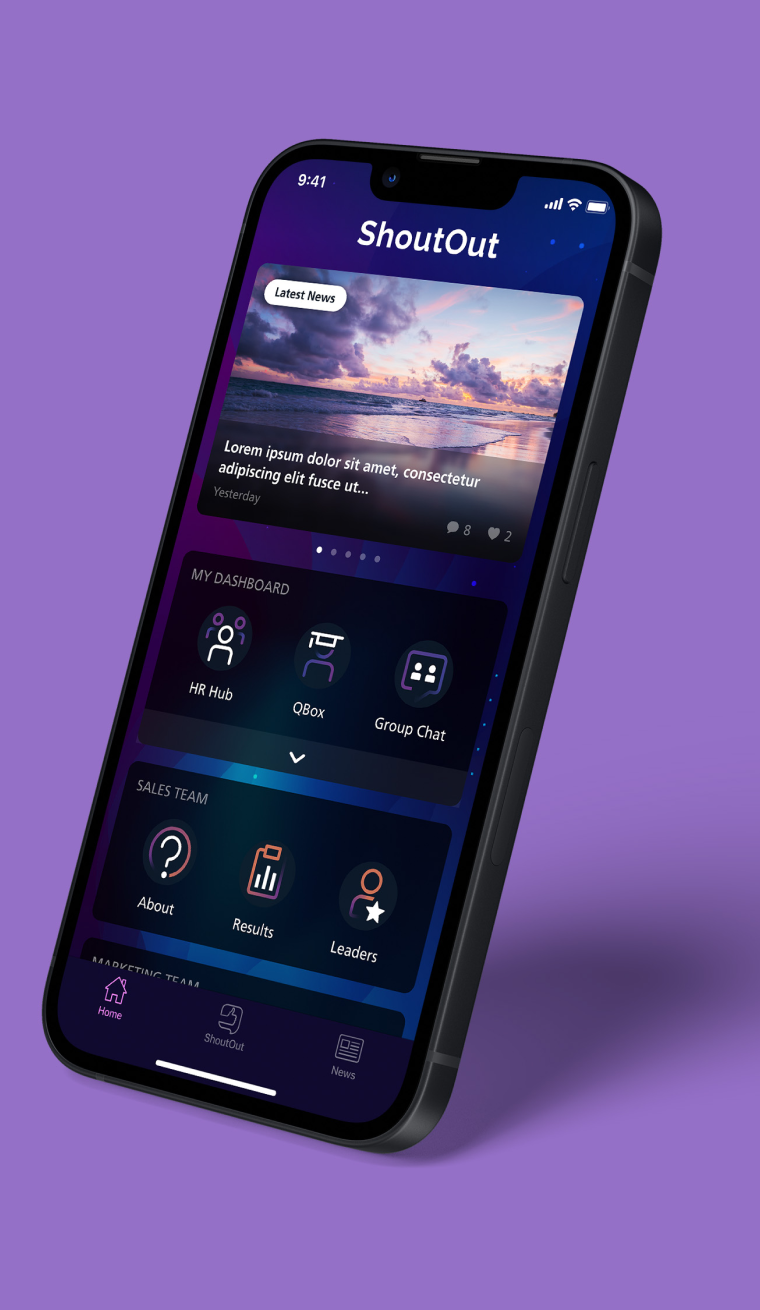
ShoutOut helps dealership groups make employee recognition timely, visible, and consistent across locations. Managers can reinforce the behaviours that matter, peers can celebrate support between departments, and leaders can see where participation and recognition coverage are strong or slipping.
For automotive organisations managing deskless teams, high turnover, and multiple rooftops, the value is practical: a repeatable recognition rhythm that does not depend on email access or one exceptional manager.
Final Takeaway
The best dealership employee recognition programs are not built around trophies or occasional events. They make everyday contribution visible, connect people across departments, and help every manager reinforce the same culture.
Start with clear behaviours, simple manager habits, inclusive access, and useful measurement. Then improve the program based on who is—and is not—being seen.