

Employee Recognition
Dealership Turnover Costs More Than You Think: How Recognition Changes the Math
Most dealership groups are losing nearly $1M a year to turnover — and don't know it. Here's how to quantify the real cost and use recognition to change the math, starting with the critical first 90 days.
The Number Nobody Wants to Do the Math On
Ask a dealer principal or HR manager how much employee turnover costs them, and most will give you a vague answer. “It’s high.” “We’re always hiring.” “The market’s tough.”
The real number is usually a shock.
Industry benchmarks put the cost of replacing a single frontline dealership employee — a sales consultant, service advisor, or parts associate — at between 50% and 200% of their annual salary, once you factor in recruiting, onboarding, lost productivity, and the invisible drag on customer relationships.
For a dealership group with 10 locations and average annual turnover of 35-40%, that’s not a people problem. It’s a financial one.
The good news: it’s one that recognition can directly address — and the math is surprisingly compelling.
What Dealership Turnover Actually Costs
Most operators track the obvious costs: job ads, recruiter fees, and manager time spent interviewing. Those are the visible expenses. The hidden ones are where the real damage accumulates.
Direct Costs
- Recruiting and advertising: $1,500–$5,000 per hire across job boards, recruiter referrals, and manager time
- Onboarding and training: 4–8 weeks of reduced productivity, plus formal training costs for certifications (OEM-mandated product training, compliance)
- Lost deals and CSI impact: A new sales consultant typically takes 3–6 months to reach average productivity; every month below target is revenue not captured
Hidden Costs
- Manager distraction: Every hire takes 10–15% of a manager’s capacity away from coaching and floor presence for at least a month
- Customer relationship gaps: Returning customers who were loyal to a specific person defect at higher rates when that person leaves
- Team morale: High turnover is contagious. Watching colleagues leave signals to your remaining team that this isn’t the place to build a career
- OEM compliance risk: Certifications and product knowledge requirements create gaps that impact manufacturer scorecard ratings
Run the numbers for your group. For a 100-person dealership workforce with 38% annual turnover, you’re cycling through roughly 38 people a year. At a conservative $25,000 per replacement, that’s $950,000 in turnover cost annually — before the intangibles.
Why Traditional Retention Tactics Fall Short
Dealership groups have tried the obvious levers:
- Salary increases and commission bumps
- Better benefits packages
- Flexible rosters
- Annual awards nights
These moves help at the margin. But they don’t solve the core problem, because most dealership turnover isn’t about money.
Exit interview data from high-turnover dealership groups consistently points to the same underlying drivers:
- “My manager never told me when I was doing a good job.”
- “I felt invisible here.”
- “There was no future for me — no one talked about growth.”
- “I gave 100% and got nothing back.”
These are recognition failures. And they compound fast in multi-location groups where frontline staff are physically distant from leadership and easily overlooked.
The Recognition–Retention Connection
The link between consistent recognition and reduced turnover is well-established. Gallup’s research consistently shows that employees who feel their work is regularly recognized are significantly less likely to leave within the next 12 months. Organizations with high recognition cultures report turnover rates 20–30% lower than industry averages.
In a dealership context, that translates directly:
- A service advisor who receives weekly specific feedback from their service manager becomes invested in their role — and far less likely to respond to a recruiter’s DM
- A new sales consultant who is publicly recognized in their first 30 days builds an emotional connection to the team before the inevitable hard month hits
- A top-performing BDC agent who sees their wins called out across the group has a reason to stay that a salary bump from a competitor can’t easily match
Recognition doesn’t replace competitive pay. But it does dramatically change how people feel about their day-to-day work — and whether they’re willing to leave it.
A Recognition-First Retention Playbook for the Critical 90 Days
The highest-risk window for dealership turnover is the first 90 days. New hires form their view of the organization fast, and if they don’t feel connected and valued during that period, they start looking elsewhere — often before they’ve fully ramped.
Here’s how to close that window with recognition.
Days 1–30: Make the New Hire Feel They Matter
- Assign a “recognition buddy” — someone whose job is to spot and call out early wins publicly
- Have the GM or dealer principal send a personal welcome message on Day 1, naming something specific about why this hire was made
- Set up a simple early-win framework: what does a “good first month” look like? Share it on Day 1 and recognize the first time they hit it
- Use your team communication platform to give new hires a public shoutout within the first two weeks
Days 31–60: Build the Recognition Habit
- Lock in a weekly rhythm — Monday team wins, Friday individual callouts — that every manager in every location follows consistently
- Coach managers away from generic praise (“Great work!”) toward specific, outcome-linked recognition (“You followed up on seven leads this week without being asked — that’s exactly what we’re building here”)
- Create visibility across locations: when a standout hire at one dealership gets recognized group-wide, it sets the standard for what matters and shows new hires the organization is watching
Days 61–90: Connect Recognition to Growth
- Tie recognition explicitly to career progression: “This is the behavior we promote from”
- Run a structured 90-day check-in that includes a recognition summary — what the employee has done well, not just what they need to improve
- Invite new hires to recognize others. A two-way recognition culture signals belonging and agency — both of which are powerful retention drivers
Scaling Recognition Across a Multi-Location Group
Recognition is easy in a single location where everyone knows each other. It breaks down at scale — across 5, 10, or 20 dealerships — because there’s no shared visibility.
The managers doing it best at scale use three principles:
- Shared channels, not siloed teams. Wins should be visible across the whole group, not just within one location. Cross-location recognition builds culture at the organization level, not just the branch level.
- Manager accountability, not manager discretion. Recognition that depends on individual managers being in the mood is recognition that never happens consistently. Build it into a structured rhythm with visible participation metrics.
- Platform infrastructure that removes friction. The harder it is to give recognition, the less it happens. Tools that let a GM or a peer give a shoutout in 30 seconds — from a phone, on the floor — get used. Portals that require logging in on a desktop don’t.
Measuring the Impact
If you’re going to make the case internally for a structured recognition program, you need to measure it. Start with three metrics:
- 90-day retention rate: What percentage of new hires are still active 90 days post-start? Set a baseline, run a recognition program, and measure the delta.
- Recognition frequency per manager: How often does each manager actively recognize a team member? Low-frequency managers are your churn risk.
- eNPS (employee Net Promoter Score): A simple quarterly pulse. “How likely are you to recommend this dealership as a place to work?” Track this by location and manager.
A 10-percentage-point improvement in 90-day retention on a 100-person workforce saves you 4 replacement cycles per year. At $25,000 per replacement, that’s $100,000 back. Recognition infrastructure pays for itself quickly.
Ready to Change the Math?
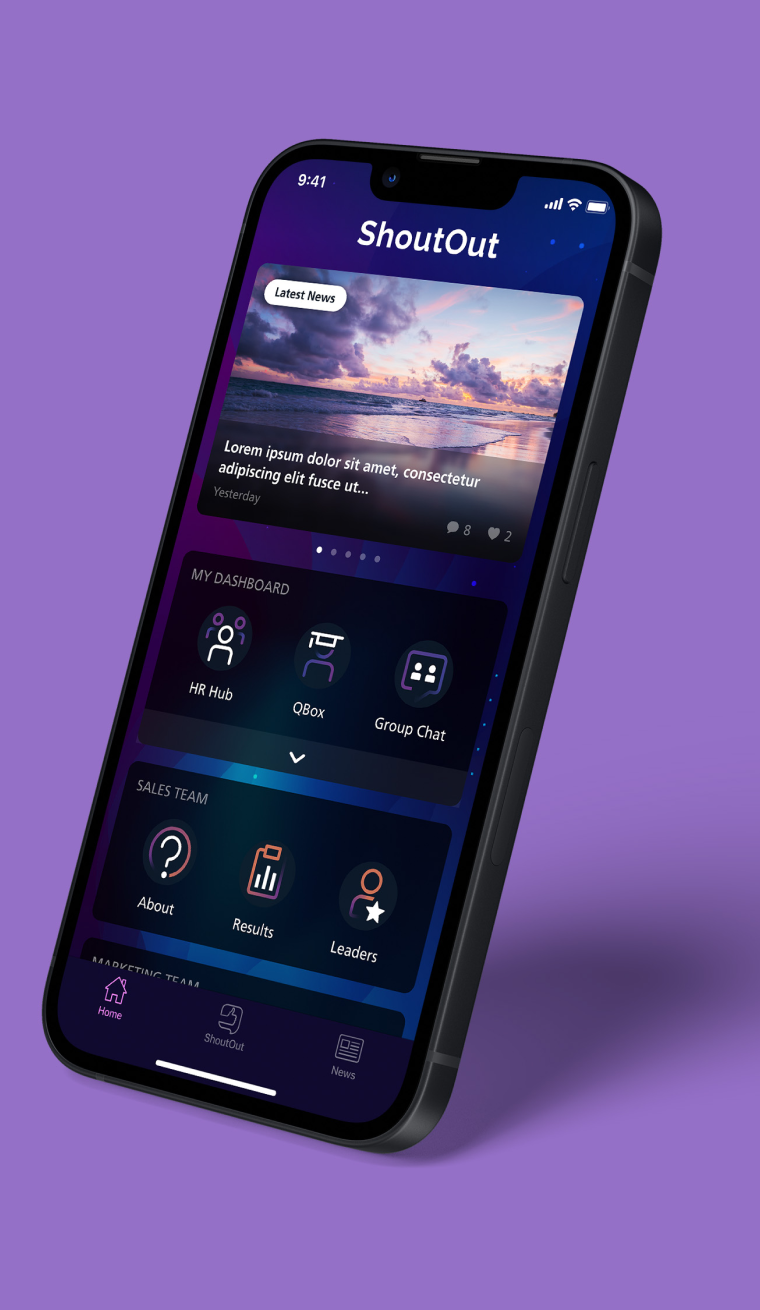
ShoutOut is built for teams that work on the floor, not behind a desk. It gives dealership managers and leaders a simple, structured way to recognize wins publicly — across every location, on every device, in real time.
If you’re running a dealership group and want to see what a recognition program designed for your environment looks like, explore ShoutOut here.
Your people are worth more than the cost of replacing them. Start acting like it.